Locked But Not Safe: The Uncomfortable Truth About HTTPS and Browser Trust Signals
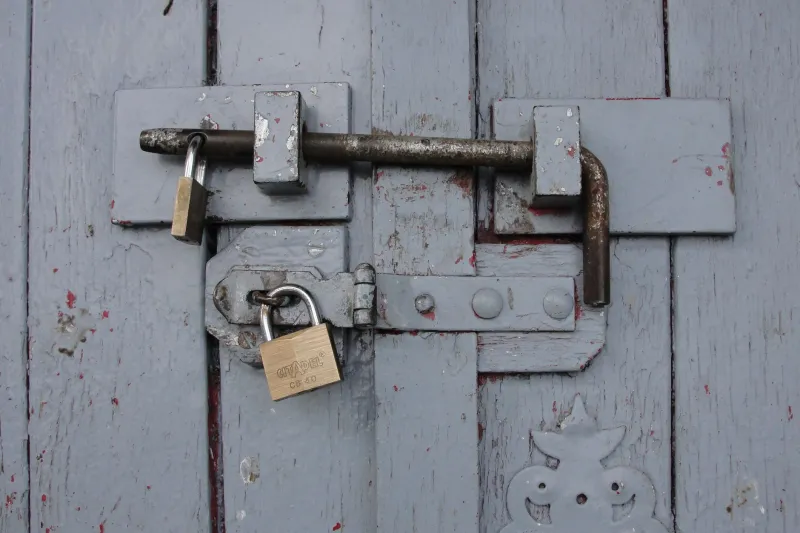
For years, internet safety guides told ordinary users the same thing: look for the padlock. If it is there, you are safe. That advice, well-intentioned at the time, has aged poorly — and cybercriminals have noticed.
Today, the presence of an HTTPS connection and its associated certificate tells you something specific and limited: that data traveling between your browser and that server is encrypted in transit. It says nothing about whether the server on the other end belongs to who you think it does, whether the site is legitimate, or whether the organization behind it has any intention of treating your information responsibly. The distinction matters enormously, and the confusion surrounding it has become one of the more quietly effective tools in the modern phishing arsenal.
What a Certificate Actually Certifies
SSL/TLS certificates are issued by entities called Certificate Authorities, or CAs. These organizations — there are hundreds of them, ranging from globally trusted giants like DigiCert and Sectigo to smaller regional players — are responsible for verifying that the entity requesting a certificate actually controls the domain in question.
The problem is that "verification" is not a uniform standard. Certificates come in three broad categories: Domain Validated (DV), Organization Validated (OV), and Extended Validation (EV). DV certificates, by far the most common type on the web today, require only that the applicant demonstrate control over a domain — typically by responding to an automated email or placing a specific file on the web server. No human reviews the application. No one checks whether the business is real, whether the domain name is designed to impersonate another brand, or whether the site is being used for fraud.
Free certificate services, most notably Let's Encrypt, have made DV certificates available to anyone at zero cost in a matter of minutes. This democratization of encryption was genuinely important for the broader security of the web. It also meant that operators of phishing sites, credential-harvesting pages, and fraudulent storefronts could now dress their operations in the same padlock that legitimate banks and retailers display.
According to the Anti-Phishing Working Group, the majority of phishing sites detected in recent years have used HTTPS. The padlock, in other words, has become a feature of the attack, not a defense against it.
Domain Validation Loopholes and Homograph Attacks
Beyond simple DV certificates, threat actors have developed more sophisticated methods for obtaining certificates that appear credible to unsuspecting users.
Homograph attacks exploit the fact that many Unicode characters look nearly identical to standard Latin letters. A threat actor might register a domain using Cyrillic or Greek characters that are visually indistinguishable from their ASCII equivalents, then obtain a legitimate certificate for that domain. The resulting URL, displayed in a browser, appears to spell out a trusted brand name. The certificate is technically valid. The domain is technically different from the one it mimics.
Subdomain abuse presents another avenue. If an attacker can create an account on a platform that allows user-generated subdomains — think certain free hosting or page-building services — they may be able to obtain a certificate that chains back to a recognizable parent domain, lending an air of legitimacy to malicious content hosted beneath it.
There are also documented cases in which certificate authorities have been compromised or have made issuance errors, resulting in certificates being generated for domains the requestor did not legitimately control. The DigiNotar breach of 2011, in which Iranian state-affiliated actors obtained fraudulent certificates for major domains including Google, remains the most consequential example on record. DigiNotar subsequently ceased operations. The incident prompted industry-wide reforms, including the development of Certificate Transparency logs — public, append-only records of every certificate issued — which now make unauthorized issuance significantly harder to conceal.
What Certificate Indicators Actually Mean
So if the padlock alone is insufficient, what should an informed user actually examine?
First, the domain name itself deserves careful scrutiny, independent of any certificate. Phishing campaigns routinely use domains that differ from legitimate ones by a single transposed character, a hyphen, or an added word — "paypa1.com," "secure-bankofamerica-login.net," and similar constructions. No certificate, however valid, changes the fact that these are not the domains they imply.
Second, users who require high assurance — particularly when initiating financial transactions or submitting sensitive personal information — should look beyond the padlock. Clicking the lock icon in most browsers reveals certificate details, including the issuing authority and the validation level. An EV certificate will display the verified organization name in some browsers, though browser vendors have been phasing out prominent EV indicators in recent years, citing mixed evidence about their effectiveness.
Third, Certificate Transparency can serve as a useful investigative tool. Websites such as crt.sh allow anyone to search the public logs for certificates issued to a given domain. If a domain you use has had dozens of certificates issued to it from obscure authorities in a short span, that warrants scrutiny.
Finally, browser warnings should never be dismissed casually. When a browser flags a certificate as invalid, expired, or issued by an untrusted authority, that warning represents a genuine anomaly. The instinct to click through and proceed is understandable when the site in question is familiar, but that familiarity may itself be manufactured.
The Regulatory and Industry Response
The CA/Browser Forum, a voluntary consortium of certificate authorities and browser vendors, sets baseline requirements for certificate issuance and management. Its standards have tightened considerably over the past decade — certificate lifespans have been shortened, validation requirements have been refined, and the Certificate Transparency framework has been made mandatory for public trust.
US regulators have been slower to act. The Federal Trade Commission has brought enforcement actions against companies that made deceptive claims about security, and the Cybersecurity and Infrastructure Security Agency publishes guidance on recognizing fraudulent sites, but there is no federal framework that directly governs CA practices or mandates minimum validation standards across the industry.
In the meantime, browser developers have taken on much of the burden. Google, Apple, Mozilla, and Microsoft collectively determine which certificate authorities their products trust, and they have demonstrated willingness to distrust or constrain CAs that fail to meet their standards — a form of market discipline that has proven more agile than legislation.
Reading the Lock Correctly
The padlock is not worthless. Encrypted connections are meaningfully better than unencrypted ones, and the infrastructure of public-key cryptography that underpins HTTPS remains sound. The problem is not the technology — it is the story that has been told about what the technology means.
A locked connection to a fraudulent site is still a fraudulent site. The encryption protects the channel; it does not vouch for the destination. For users navigating an environment in which bad actors can obtain valid certificates in minutes, the padlock should function as a necessary but thoroughly insufficient condition for trust — one data point among several, not a green light to proceed without further thought.