Ghost Accounts, Real Profits: The Data Broker Industry That Never Forgets You
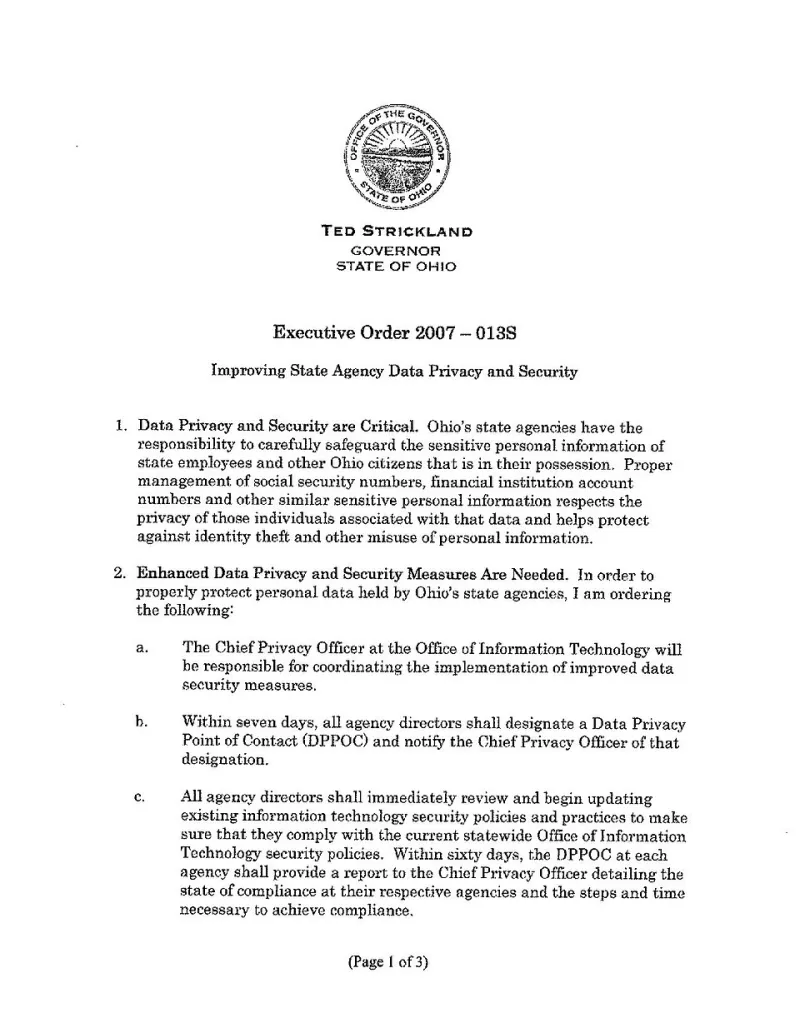
Photo: Ohio. Governor (2007- : Strickland), Ohio. ‡b Governor (2007- : Strickland), Ohio. ‡b Governor (2007- : Strickland), Public domain, via Wikimedia Commons
There is a common assumption embedded in the act of deleting an account: that the data goes with it. A user closes their profile on a retail site, a social platform, or a fitness app, and they move on with a quiet confidence that their information has been scrubbed from the digital record. That assumption is almost always wrong.
The data broker industry — a sprawling, largely unregulated ecosystem of companies whose sole business is collecting, aggregating, and selling personal information — operates on a fundamentally different timeline than the platforms consumers interact with directly. By the time a user decides to close an account, their data may already have been sold, resold, and incorporated into profiles maintained by dozens of third-party aggregators. Account deletion, in most cases, does not reach those downstream repositories.
How Data Leaves the Platform Before You Do
When you create an account on nearly any commercial platform, you are implicitly consenting — often through lengthy terms of service that few people read — to a range of data-sharing arrangements. Behavioral data, purchase history, demographic information, and device identifiers are routinely transmitted to advertising networks, analytics providers, and data licensing partners in real time. This transmission begins the moment you register and continues throughout the life of your account.
By the time you request account deletion, that information has already propagated outward. The platform may honor your deletion request and remove your profile from its own servers, but it has no obligation — and in most cases, no mechanism — to retrieve data already shared with third parties. Those parties, in turn, may have shared it further still.
Data brokers such as Acxiom, LexisNexis Risk Solutions, Experian's marketing division, and hundreds of smaller aggregators build consumer profiles from this kind of secondhand acquisition, supplementing it with public records, voter registration data, property filings, and web-scraped content. The result is a profile that can persist indefinitely, regardless of what the original account holder does on their end.
The Legal Landscape: Patchwork Protections
United States law on this subject is fragmented and largely inadequate for the scale of the problem. Unlike the European Union's General Data Protection Regulation, which grants consumers a broad "right to erasure," federal law in the U.S. provides no universal right to demand deletion of personal data held by private companies.
Some state-level protections exist. California's Consumer Privacy Act (CCPA) and its successor, the California Privacy Rights Act (CPRA), grant California residents the right to request deletion of their data from businesses that meet certain revenue or data-volume thresholds. Virginia, Colorado, Connecticut, and Texas have enacted similar frameworks. However, enforcement is uneven, exemptions are numerous, and the burden of submitting deletion requests falls entirely on the consumer.
For residents of states without such protections, options are narrower. The Fair Credit Reporting Act (FCRA) regulates how certain categories of data — primarily credit-related — can be used, but it does not govern the broader data broker market.
Discovering Who Holds Your Data
Identifying which brokers maintain a profile on you is itself a labor-intensive process. There is no central registry. However, several approaches can help.
The major consumer-facing data brokers — including Spokeo, WhitePages, BeenVerified, Intelius, and MyLife — allow users to search for their own records and submit opt-out requests. Privacy rights organization Privacy Rights Clearinghouse maintains a directory of known data brokers along with their opt-out procedures. The nonprofit World Privacy Forum publishes similar resources.
For a more systematic approach, services such as DeleteMe, Kanary, and Optery operate as third-party removal agents, submitting opt-out requests on a user's behalf across dozens of brokers for an annual subscription fee. These services do not guarantee complete removal — new records can appear as brokers refresh their databases — but they reduce the manual burden considerably.
Practical Steps Toward a Smaller Digital Footprint
No approach eliminates data broker exposure entirely, but a layered strategy meaningfully reduces it.
Request deletion before closing accounts. Before deactivating a profile, navigate to the platform's privacy settings and submit a formal data deletion request. Document the request and the platform's response. This creates a record and, in states with applicable laws, may carry legal weight.
Use opt-out submission tools. Work through the major broker opt-out portals directly or through a subscription removal service. Expect to repeat this process periodically, as brokers re-acquire data from new sources.
Minimize data at the point of entry. Use disposable or alias email addresses for non-essential accounts. Avoid providing optional demographic fields. Decline loyalty programs that require a phone number or full name.
Monitor your credit and identity. Because data broker profiles are frequently used to pre-screen individuals for financial products, monitoring your credit reports through AnnualCreditReport.com can surface unexpected activity. Consider placing a security freeze with each of the three major credit bureaus — Equifax, Experian, and TransUnion — as an additional layer of protection.
The Illusion of the Clean Break
The discomfort in all of this is philosophical as much as practical. Americans have grown accustomed to thinking of online accounts as spaces they occupy and can vacate at will. The data broker model inverts that expectation: the account is merely an entry point. Once your information enters the commercial data ecosystem, the concept of deletion becomes aspirational rather than definitive.
Regulatory momentum is building slowly. The proposed American Privacy Rights Act, which advanced in Congress in 2024 before stalling, would have established a federal right to data deletion and required brokers to register with the Federal Trade Commission. Whether a version of that legislation ultimately passes remains uncertain.
In the meantime, the responsibility falls to consumers to understand that closing an account is not the end of the story — it is frequently just the end of the chapter they can see.